

Duolingo English Test Explained: Is It Easier Than IELTS or PTE for Study Abroad?
19/11/2025
How to Move Abroad: Step-by-Step Guide to Immigration Pathways for Professionals
19/11/2025
How to Get a Band 7+ in IELTS: Study Plan, Practice Tips, and Common Mistakes to Avoid

Scoring a Band 7 or higher in IELTS is a big goal for many students who plan to study or settle abroad. A Band 7 shows that you can communicate effectively in English — a level most universities and visa offices expect.
But many students from India, even those who speak English daily, often find themselves “stuck” at 6.0 or 6.5. The truth? You don’t need to be perfect in English — you just need a smart plan, regular practice, and a few right habits.
Let’s walk through how you can reach Band 7+ step by step — in a way that’s simple, realistic, and effective.
1. Understanding the IELTS Test Format
Before you begin preparing, it’s important to know what exactly the test includes.
1.1 The Four Modules
IELTS has four parts:
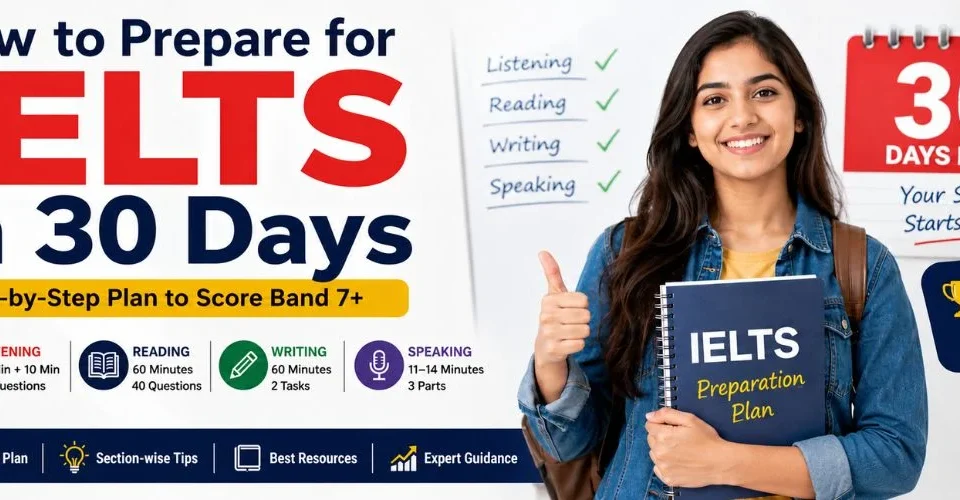
- Listening (30 minutes): You’ll listen to recordings and answer questions.
- Reading (60 minutes): Three passages with 40 questions in total.
- Writing (60 minutes): Two tasks — one report or letter and one essay.
- Speaking (11–14 minutes): A face-to-face interview with an examiner.
1.2 What Band Scores Mean
Each section is scored from 0 to 9. A Band 7 means you are a good user — you can understand complex English and express yourself clearly with minor mistakes.
Most universities in countries like Canada, the UK, Australia, and New Zealand usually ask for an overall 6.5 – 7.5 score.
2. How to Create a Study Plan for Band 7+
You don’t need to study all day. What matters is consistent and focused effort.
2.1 Weekly Study Plan
Week 1–2: Learn the Basics
- Understand the test format.
- Build topic-based vocabulary — education, environment, technology, etc.
- Watch IELTS sample videos and listen to podcasts to improve comprehension.
Week 3–4: Practice Under Timed Conditions
- Attempt one full module each day.
- Write at least one essay (250 words) every day.
Week 5–6: Strengthen Weak Areas
- Record yourself speaking and listen for improvement points.
- Take at least two full mock tests per week.
- Get your writing tasks checked by a trainer or mentor.
2.2 Daily Practice Time
Spend 2–3 hours a day for 6–8 weeks with honest focus — that’s usually enough for most students to reach Band 7+.
3. Practice Tips for Each IELTS Module
3.1 Listening Tips
- Read the questions before the audio starts.
- Check spellings carefully — even a missing letter can cost marks.
- Get used to British and Australian accents.
- Use official practice materials like the Cambridge IELTS series.
3.2 Reading Tips
- Don’t read every word — skim for main ideas and scan for answers.
- Focus on understanding question types like True/False/Not Given.
- Read one English article every day — BBC, The Guardian, or similar.
3.3 Writing Tips
- Task 1: Describe the overall trend or purpose clearly.
- Task 2: Write a well-structured essay with an intro, 2 paragraphs, and a conclusion.
- Use linking words naturally: however, moreover, in addition.
- Don’t memorize fancy lines — write like you speak, clearly and correctly.
3.4 Speaking Tips
- Speak confidently and naturally — accent doesn’t matter.
- Give complete answers, not just “yes” or “no.”
- Record mock interviews and notice where you pause or repeat.
- Talk daily with friends or in class to stay fluent.
4. Common Mistakes to Avoid
Relying Too Much on Grammar
IELTS is about communication, not perfection. Focus more on fluency and clarity.
Memorising Answers
Examiners can easily tell when you’re repeating memorized lines. Be yourself — real answers sound better.
Ignoring Timing
Manage your time wisely, especially in Writing and Reading. Always use a timer while practicing.
Skipping Practice Tests
Take 5–6 full mock tests before your exam. It builds confidence and exam stamina.
5. Tips for Indian Students
5.1 Use English in Everyday Life
Speak English at home or with friends for at least 15 minutes daily.
5.2 Watch, Listen, and Read
English movies, YouTube channels, and news shows help you learn naturally.
5.3 Get Feedback
Join a coaching class or online group. Trainers can point out small mistakes that make a big difference.
5.4 Stay Consistent
Daily study (2 hours) works better than long weekly sessions. Regular practice helps you think in English.
6. Example Weekly Schedule
7. Staying Motivated
Preparing for IELTS can feel long — especially when you’re working or studying. Remember: every hour you spend practicing is moving you closer to your dream university.
Set small weekly goals and celebrate small improvements — whether it’s better writing or faster reading. Motivation grows from progress.
Ready to Begin Your IELTS Journey?
If you’re still unsure how to start, or you’ve been stuck at 6.5 and can’t seem to cross that line — don’t worry. You’re not alone.
Sometimes, all you need is the right direction and a little expert support. At Globetrix.in, our team helps students plan their IELTS study in a simple, personalized way — focusing on what really works for you.
No pressure, no complicated steps — just honest guidance to help you reach your target score. Let’s make your IELTS preparation smoother and smarter — so you can focus on your dream university abroad.